

Information Organization and Access
Organization Informatics
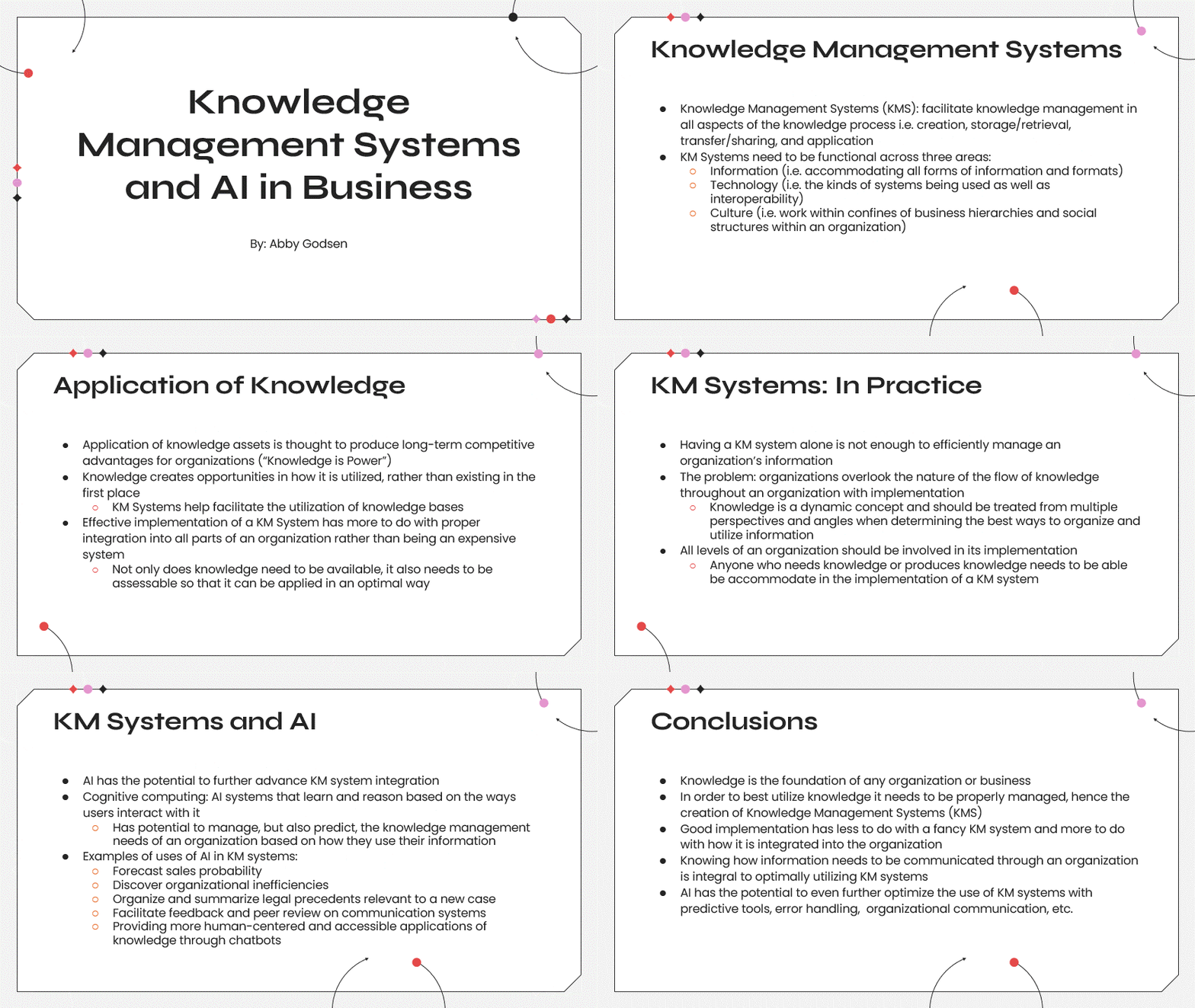
Knowledge Management Systems (KMS) are foundational to information storage and findability. These two projects explore this topic in two ways. 1) KMS evolution when integrated with AI tools in business practices, and 2) How Specialized Information Systems (SIS) like KMS vary and are used across different fields. These two projects allowed me to take a look at what tools we are using right now to manage our information and ways in which we can expand on their use to create more effective and adapatble tools for the future.
Data Organization and Representation
XML or Extensible MarkUp Language, is foundational to the structure, storage, and transportation of data. Although fairly common, there are often gaps in knowledge by users of how XML functions and how to use it to its fullest potential. This paper takes a look at XML as a language, common concerns with XML as a lanaguage, and takes the opportunity to explore how re-evaluating how we view and use XML today can allow people to better harness its potential.
Data Curation and Management
Metadata is simply "data about data", but, more so than that, it is a descriptive language used to identify and find items in a collection. When it comes to cultural heritage, accessibility and proper identification of items is crucial for community access. This paper explores how implementation of metadata standards in cultural hertiage collections has the opportunity to expand findability and access.
Information Representation
Structured Query Language (SQL) is a foundational programming language that is often used to create interconnected tables and databases. For this project, I wanted to replicate an existing archival or historical database to see how information on the back-end might mirror what we use on the user-end. As my model, I chose to explore Indiana's living historical museum Conner Prarie's freely accessible database. Use their freely accessible metadata I created a sample database using SQL and created catalog descriptions using modern metadata standards. This was also completed as an honors contract.

Introduction to Research in Informatics
In academia, we all at some point must use online databases for research purposes for a paper, project, or research study, but how effective are they at doing their job? This project explores current database models and how they might be enhanced on both the front and back-end using technologies like Web 3.0 and blockchain. Although not a full research study, it lays the groundwork for further research and discovery on this topic.
Data Archives
Every archive has its own system and methods it uses for cataloging their collections. The best way to learn about an institution's information structures is to explore it. Through this informational interview and investigative essay, I explore the IU Indianapolis Herron Library catalog and how their collections are organized. At the end of the paper I discuss some ideas for areas of improvement for the current system.
Tools & Techs for Info Professionals
The frameworks we use to describe data are just as important as making sure this information is legible to our audience. In this exercise I translate information across different metadata frameworks including Resource Description and Access (RDA), Machine Readable Cataloging (MARC), and plain English descriptions in order to make a Linked-Data framework, which would connect multiple listings in a library's database.
Ancient STEM Fields
Archaeology and archives are fields often at odds with each other. Although seeking to learn about and explore the history of the past, they do so in very different ways. However, I would argue that archival methods can only enhance the work being done by archaeologists today. In this paper, I expand on this argument and explore why the fields are not more interconnected.
Database Design
For this course I designed an SQL database using Access that looks at the information contained within a historical society on a larger scale. It includes not only information about objects and collections, but also about education initiatives and employee information connected to all aspects of the institution.
